Why Pet Hair Is So Difficult to Remove
Hair from dogs and cats doesn't just sit on top of your carpet or upholstery. It works its way into the fabric loops at an angle, anchoring itself against the fiber structure. This is particularly true for short, coarse dog hair, which essentially functions like a needle threading through fabric weave. Standard vacuuming creates suction perpendicular to the surface, which isn't effective at extracting hair that's embedded at an angle.
Add to this the static electricity that naturally builds up in vehicle interiors. Especially in Sacramento's dry summer months. And you have hair that's both mechanically embedded and electrostatically attracted to the very surfaces you're trying to clean it from. This is why lint rollers, which work fine on smooth fabrics, largely fail on automotive carpet and woven seat fabric.
What Actually Works: The Method We Use
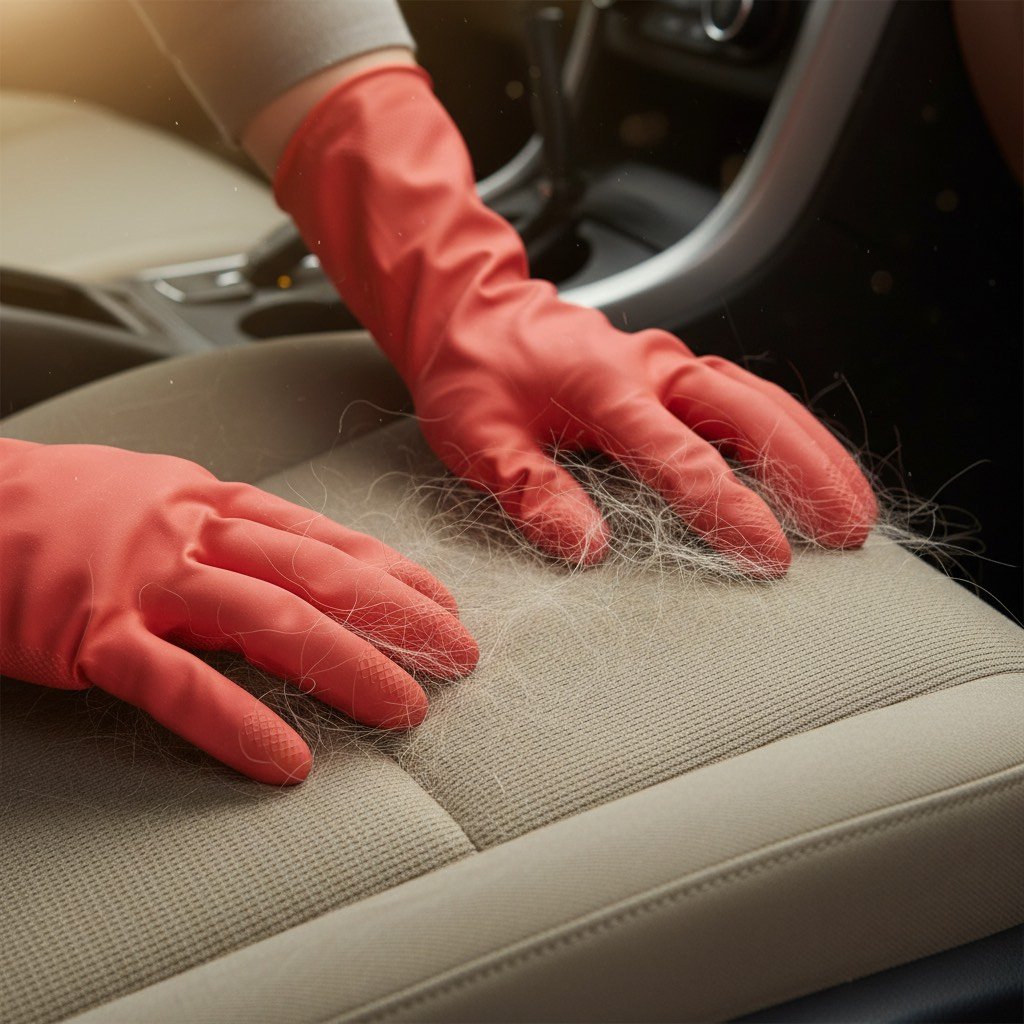
Step 1. The Rubber Glove Technique
A slightly damp rubber household glove dragged across carpet and upholstery with firm pressure creates friction and static charge that clumps hair into gatherable bunches. Work in one direction. Don't scrub back and forth, as this re-embeds the hair in a different direction. The rubber surface grips and rolls hair out of the fabric loop structure in a way vacuum suction alone cannot. This should be your first step, before any vacuuming, to pre-aggregate the hair.
Step 2. Pumice Stone or Pet Hair Brush
A medium-grit pumice stone or a dedicated pet hair removal brush (the FURemover brand is reliable) used after the rubber glove pass will collect the clumped hair and extract any remaining embedded strands. Apply moderate pressure and consistent strokes in one direction. On heavily loaded carpet, this step alone can remove more hair than a standard vacuum attachment.
Step 3. High-Power Vacuum with Brush Attachment
Now you vacuum. A shop vacuum or a detailing vacuum with a rotating brush attachment (not a standard nozzle) can extract the loosened hair effectively. The brush agitation lifts remaining hair out of the fiber structure as you vacuum. Standard household vacuum attachments are insufficient for this stage. The suction-to-brush-agitation ratio matters significantly.
Your interior deserves a professional reset
Our Complete interior service uses steam extraction and professional pet hair removal equipment. We've restored interiors with years of accumulation to showroom condition. We come to you anywhere in Sacramento and the surrounding areas. Aura interior detailing lifts embedded pet hair the right way.
Book an Interior DetailFabric vs. Leather: Different Challenges
Woven Fabric Seats and Carpet
These surfaces are the most challenging because of the fiber loop structure described above. The three-step method above is the correct sequence. For heavily embedded hair, a steam cleaner applied before the rubber glove step can loosen fibers and make extraction easier. Steam also sanitizes the surface, eliminating the odor compounds that pet hair deposits.
Leather Seats
Hair on smooth leather surfaces is mechanically easier to remove. It doesn't embed the same way. A microfiber cloth with light moisture will collect most surface hair. However, hair finds its way into seat stitching, perforations, and seam channels where it becomes difficult to extract without a fine brush and vacuum nozzle work. Those seam and perforation deposits are what cause persistent pet odor on leather-interior vehicles even after cleaning the surface.
Prevention: The Investment That Pays Off
If you transport pets regularly, a few simple investments dramatically reduce the accumulation rate:
- Seat covers with smooth surfaces: Neoprene or vinyl-backed covers prevent hair from reaching fabric seats and are easy to remove and wash
- Cargo liners for SUVs and hatchbacks: A fitted rubber liner prevents hair from embedding in trunk carpet where it's hardest to reach
- Regular brushing before loading: Brushing your pet immediately before a car trip reduces the volume of loose hair shed during the ride by 40-60%
- Microfiber in the glovebox: A quick wipe-down of seats after every trip prevents hair from working deeper into the fabric over time
When to Call a Professional
If your interior has accumulated more than a few months of pet hair. Particularly if there's accompanying odor. The DIY methods above will improve but likely not fully resolve the situation. Professional detailing uses commercial-grade equipment: high-power extraction vacuums, steam cleaners that penetrate deep into fabric pile, and enzymatic cleaners that break down the organic compounds in pet dander and hair that generate odor.
Our interior detailing process for pet-affected vehicles involves a pre-treatment inspection, mechanical hair removal, steam extraction across all fabric surfaces, enzymatic odor treatment, and a final vacuum and conditioning pass. The result is an interior that doesn't just look clean. It's genuinely reset.