Why Air Fresheners and Sprays Fail
Hanging pine trees, Febreze, and aerosol sprays all operate on the same principle: overwhelm your olfactory sense with a competing scent until the original smell is no longer consciously detected. They don't neutralize odor molecules. They bury them. When the masking scent fades, the original odor re-emerges, often more concentrated than before because heat cycling in Sacramento's summer has been baking the organic material deeper into fabric and carpet fibers throughout the day.
This cycle. Spray, fade, respray. Is why many drivers feel their car has an odor problem that's impossible to solve. It's not the smell that's impossible to solve. It's the approach.
Understanding the Sources: What You're Actually Dealing With
Food and Beverage
Food odors are caused by volatile organic compounds released by decomposing organic matter. Spills that penetrate carpet padding. Particularly dairy, meat juices, or sugary drinks. Create conditions for bacterial growth that generates ongoing odor even after the visible spill is cleaned. The odor source is microbial, not just chemical, which is why surface cleaning doesn't fully resolve it.
Tobacco Smoke
Cigarette smoke deposits tar and nicotine compounds on every porous surface in a vehicle. Headliner fabric, seat foam, carpet backing, and HVAC ductwork. These deposits are persistent and require chemical degradation, not just removal. Ozone treatment is particularly effective for smoke because ozone molecules react with and oxidize the organic compounds responsible for the odor.
Pet Odor
Pet odor has two components: hair-associated dander compounds and urine residue. Dander odor responds well to steam cleaning and enzymatic treatment. Urine presents a greater challenge because the uric acid crystals responsible for odor are insoluble in water. They require enzymatic cleaners specifically designed to break down uric acid, not just dilute it.
Mildew and Moisture
Mildew odor indicates active or historical moisture infiltration. Often from a leaking door seal, sunroof drainage issue, or a wet item left in the vehicle. The odor is produced by fungal spore activity, and eliminating it requires both removing the moisture source and treating the affected materials with an antimicrobial agent. No amount of air freshener addresses the underlying fungal activity.
A genuinely fresh interior is possible
Our interior detail process uses steam extraction, enzymatic treatment, and ozone where needed. A complete reset, not a mask. View our interior service options or book directly. Aura interior detailing includes deep extraction and odor treatment.
Book an Interior DetailWhat Actually Works: The Effective Methods
Steam Cleaning
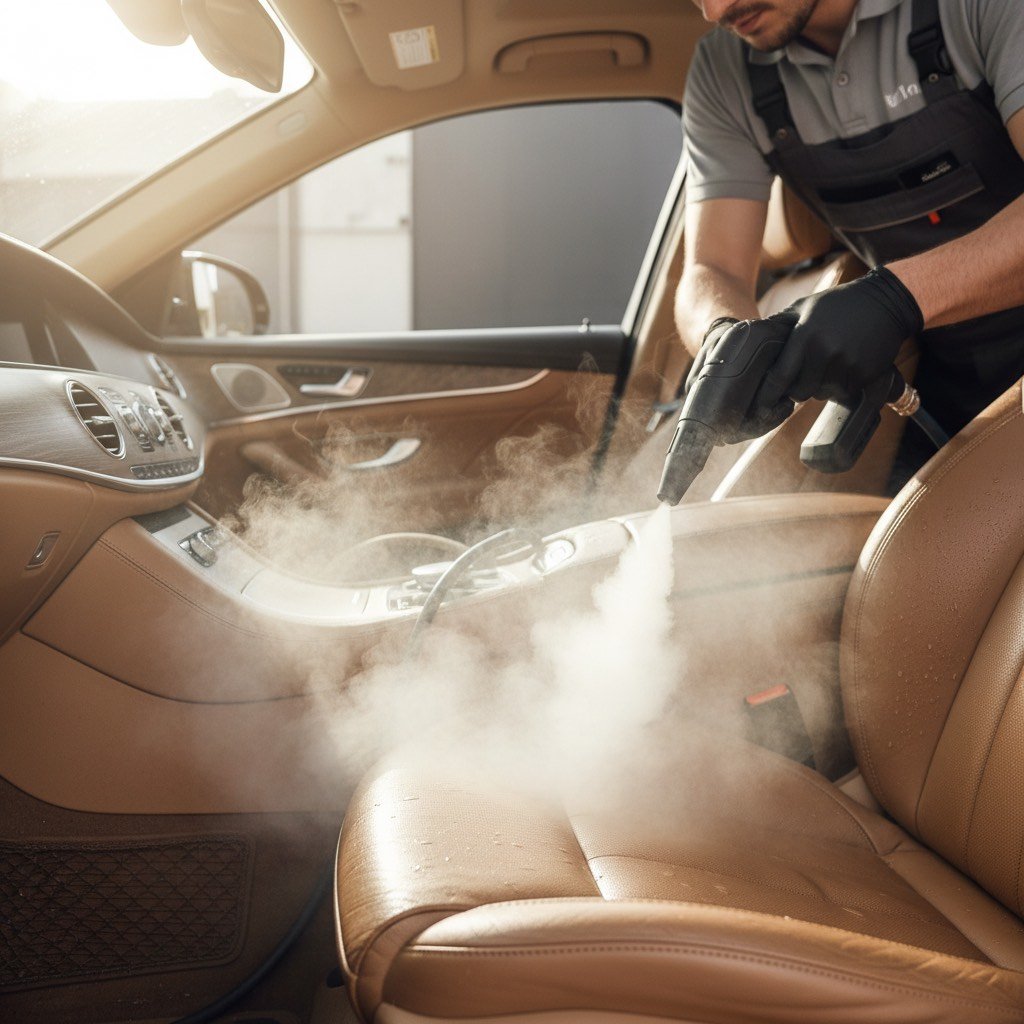
High-temperature steam penetrates fabric fibers, kills bacteria and mold spores responsible for odor, and lifts dissolved organic material out of fabric pile for extraction. It's the most effective general-purpose odor elimination method for food, pet dander, and general biological odor. Steam cleaning reaches temperatures that chemical sprays cannot. Effectively sterilizing the surface rather than treating it.
Enzymatic Cleaners
Enzyme-based cleaners contain biological enzymes that break down specific organic molecules. Particularly proteins and uric acid compounds. For pet urine and food spills, enzymatic cleaners eliminate the molecular source of the odor rather than masking it. The key is dwell time: enzymes need contact time with the organic material to complete their work. Typically 10-15 minutes of wet contact before extraction.
Ozone Treatment
Ozone generators produce O₃ molecules that react with and oxidize organic odor compounds, permanently altering their molecular structure. Ozone treatment is particularly effective for smoke contamination and severe biological odors that have penetrated HVAC systems and headliner materials. It requires the vehicle to be unoccupied during treatment and aired out thoroughly afterward. Our Odor Removal (Ozone) add-on is available for $60 on any package.
Baking Soda: Where It Works
Baking soda is genuinely effective as an odor absorber for mild, surface-level odors. Particularly for absorbing residual moisture and light food smells in carpet. Applied generously, left for several hours, and vacuumed thoroughly, it provides meaningful improvement for mild cases. It does not address embedded biological odors or smoke.
When to Call a Professional
If an odor has persisted through multiple cleaning attempts, if it originates from smoke contamination, or if you suspect active mildew, professional intervention is the right path. Our interior detail service for odor-affected vehicles involves a source assessment, steam extraction on all fabric surfaces, enzymatic treatment for biological odors, and ozone treatment when the situation warrants it. We also check for moisture entry points that might be causing ongoing recontamination.
The Deep Interior package at $159 for sedans includes steam extraction and full interior sanitization. The baseline for genuine odor elimination, not temporary masking.